
- 0314 0226667
China to Pakistan Air Exworks shipments provide a fast, reliable way to move goods directly from suppliers to your location. With expert handling at every step, your cargo reaches its destination efficiently, minimizing delays and ensuring smooth delivery.
Speedaf Logistics specializes in air freight , sea freight, warehousing and fulfillment, and domestic transport. Our services streamline every step of your shipment, providing reliable, fully managed logistics solutions from China to Pakistan.
Understanding Incoterms EXW and Beyond
Shipping from China to Pakistan comes with many choices, and one of the most important things to know is the shipping term, or Incoterm, you’re using. If you’ve heard the term EXW, don’t worry. It sounds complicated, but it’s really simple once you break it down.
What EXW Means
EXW stands for Ex Works. Basically, it means the seller in China makes the goods available at their warehouse or factory. From that point on, you, the buyer, take care of everything else. That includes picking up the goods, arranging shipping, handling export paperwork, paying for freight, and clearing customs in Pakistan.
It’s like buying something from a shop, but instead of the shop delivering it to your home, you have to pick it up and figure out how to bring it all the way to your front door. EXW gives you control, but it also means you carry the responsibility.
EXW vs FOB and DDP
You might also hear about FOB or DDP. FOB, or Free On Board, means the seller handles getting the goods onto the ship in China. You take over once the goods are loaded. DDP, or Delivered Duty Paid, is the opposite of EXW. The seller takes care of almost everything, including shipping, customs, and delivery to your location in Pakistan.
Knowing the difference helps you choose the option that fits your budget and comfort level. If you want full control and can handle logistics, EXW is perfect. If you prefer someone else handling most of the process, DDP might be better.
Why Incoterms Matter
Understanding EXW and other Incoterms is not just about words. It can save you money and prevent surprises. Imagine arranging sea freight from Ningbo to Karachi without knowing who handles the export paperwork. A missed step could delay your shipment and cost you extra.
Choosing the Right Origin Port in China
When shipping from China to Pakistan, picking the right origin port can make a huge difference in cost, speed, and reliability. With so many options like Ningbo, Shanghai, Shenzhen, Nansha, Guangzhou, and Qingdao, it can feel overwhelming. But don’t worry, we’ll break it down for you in an easy way.
Major Ports and Their Advantages
Ningbo and Shanghai are popular choices for exporters because they handle a massive volume of containers every day. If your goods are electronics, clothing, or machinery, these ports often offer regular sailings to Karachi and Port Qasim. Shenzhen and Nansha are great if your supplier is in southern China, which can save you a day or two of inland transport. Guangzhou is also a solid choice, especially for large shipments or bulky items.
Matching Your Port to Your Shipment
Think about what you’re shipping. Small parcels or lightweight items might work well from Ningbo or Shenzhen using LCL sea freight. Bigger shipments, like full container loads (FCL shipping China to Pakistan), are often cheaper and faster from Shanghai or Guangzhou because these ports handle more large containers.
Transit Time Matters
Transit time is another key factor. From Nansha to Karachi or Port Qasim, sea freight usually takes around 18 to 22 days. Ningbo to Karachi is slightly longer, around 20 to 25 days, depending on the shipping line and schedule. Picking the right port can shave days off your delivery, which is crucial if you’re on a tight timeline or need your goods fast.
Tips for Smart Port Selection
Always check with your freight forwarder before booking. They can suggest which port offers the fastest transit, lowest cost, or easiest customs clearance for your product type. If you’re using EXW shipping, the port choice matters even more because you’re responsible for getting the goods from the warehouse to the port.
Also, consider the shipping route and frequency. Some ports have multiple sailings each week to Pakistan, while others might have fewer options. Choosing a port with regular services reduces delays and gives you more flexibility.
Destination Ports in Pakistan
After picking the right port in China, the next step is knowing where your shipment will land in Pakistan. Choosing the right destination port can save you time, money, and a lot of headaches.
Karachi Port
Karachi Port is Pakistan’s busiest and most well-known port. Most FCL and LCL shipments from China, like electronics, textiles, or machinery, arrive here. The port handles huge volumes every day, which makes it reliable and fast for clearance. If you’re looking for consistent sea freight schedules from Ningbo, Shanghai, or Nansha to Pakistan, Karachi Port is usually the top choice.
Port Qasim
Port Qasim is another popular destination, especially for large containers and industrial goods. It’s slightly newer and more modern than Karachi Port, with dedicated terminals for different cargo types. Port Qasim is perfect if you want smoother customs handling and fewer delays during peak seasons.
Gwadar Port
Gwadar is an emerging port that’s gaining attention because of the CPEC trade route. While fewer shipping lines serve Gwadar directly from China, it’s becoming a smart option for businesses planning long-term growth or handling heavy shipments.
Choosing the Best Port for Your Shipment
Picking the right port depends on your shipment size, type, and urgency. For small parcels or LCL shipments, Karachi Port is usually faster and easier. If you’re shipping large containers, Port Qasim offers dedicated services that can reduce waiting times. Gwadar is worth considering for strategic shipments in the future.
How Speedaf Logistics Can Help
Handling customs, duties, and inland transport can be tricky. That’s where Speedaf Logistics comes in. They specialize in China to Pakistan shipping and make the whole process smooth. Whether you’re shipping FCL or LCL, small parcels, or urgent air freight, Speedaf Logistics can guide you through port selection, transit times, and customs clearance, ensuring your goods arrive safely and on time.
Shipping Methods and Container Types
Once you know your origin and destination ports, the next step is deciding how to move your goods from China to Pakistan. Choosing the right shipping method and container type can make your shipment faster, cheaper, and stress-free.
Sea Freight: FCL vs LCL
Sea freight is the most popular method for shipping large or bulky items from China to Pakistan. If you have enough goods to fill a whole container, FCL shipping China to Pakistan is the way to go. It’s usually faster, more secure, and cost-effective for large shipments.
If you’re importing smaller quantities, LCL shipments let you share container space with other importers. This is great for small businesses or first-time importers who don’t have enough cargo to fill a full container. LCL sea freight is cheaper for small shipments, but transit times can be slightly longer since containers may need to be consolidated or split at the port.
Air Freight for Speed
Air freight is perfect when you need goods delivered quickly. From ports like Shenzhen, Ningbo, or Nansha to Karachi or Port Qasim, air shipments usually arrive in 3 to 6 days. This option is ideal for high-value items or urgent shipments, though it costs more than sea freight.
Choosing the Right Container
For FCL shipments, the two most common container sizes are 20ft and 40ft. A 20ft container is great for medium-sized shipments, while a 40ft container works best for larger shipments or bulky items. LCL shipments don’t require a full container, so you only pay for the space your cargo takes.
Tips for Smart Shipping
Before you book, consider your budget, shipment size, and urgency. If cost is your priority and your goods aren’t urgent, sea freight with FCL or LCL is ideal. If you need speed or are shipping valuable items, air freight is the better choice.
Working with an experienced logistics partner can make all the difference. They can help you decide between FCL and LCL, calculate shipping costs, and ensure your goods are handled properly throughout the journey.
Small vs Bulk Shipments: A Guide for SMEs
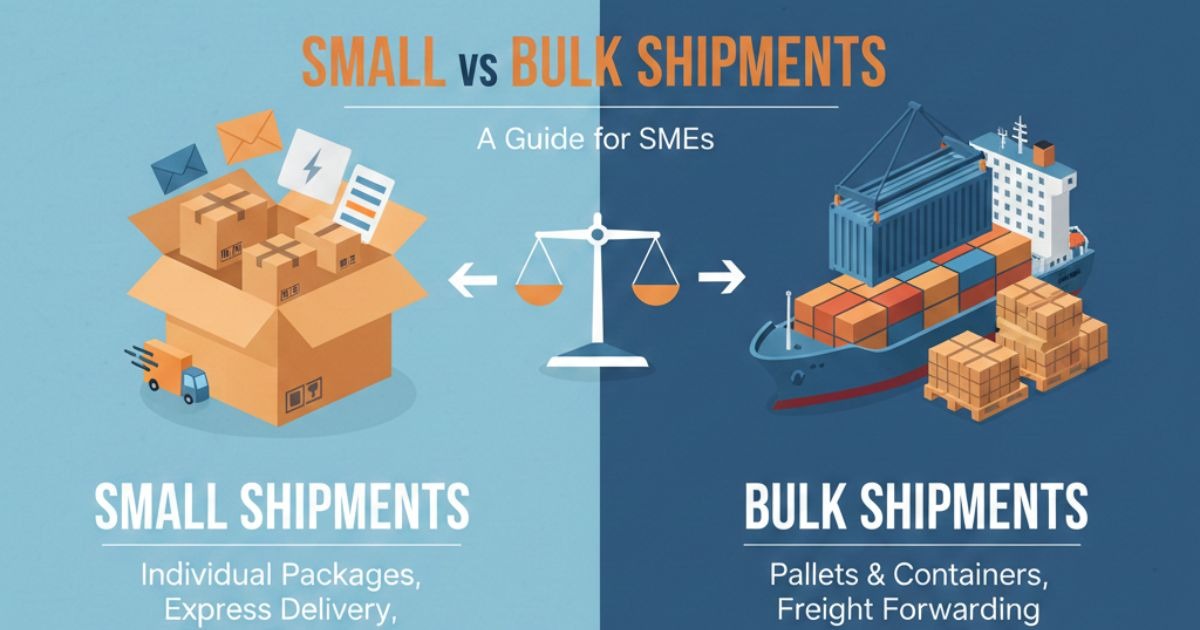
Whether you’re a small business or a growing company, shipping from China to Pakistan comes in all shapes and sizes. Understanding the difference between small and bulk shipments can help you save money and avoid unnecessary headaches.
Small Shipments
If you’re importing a few items or samples, LCL sea freight or air freight is usually the best option. You only pay for the space your goods take, which keeps costs low. Air freight is perfect for urgent or high-value items, while LCL sea freight works well if you’re not in a rush and want to save on costs.
Small shipments also allow you to test the market, try new products, or handle seasonal demand without committing to a full container. Even if you’re new to importing, managing small shipments is a great way to learn the ropes of customs, documentation, and port procedures.
Bulk Shipments
For larger quantities, FCL shipping China to Pakistan is the smarter choice. A full container is more cost-effective for large shipments and reduces handling risks compared to sharing space in LCL. It’s ideal for products like electronics, textiles, machinery, or any goods where volume matters.
Bulk shipments require careful planning. You’ll need to consider container size, transit times, port selection, and customs clearance. But once you get the process right, FCL shipping can streamline your operations and give you better control over your supply chain.
Tips for SMEs
Start by assessing your order size, budget, and urgency. Small shipments are flexible, low-risk, and easier to manage, while bulk shipments are cost-efficient and faster per unit for large quantities. Planning ahead and choosing the right shipping method ensures your goods arrive safely and on time.
Working with a reliable logistics partner like Speedaf Logistics can simplify the process. They can advise on the best shipping method, help with documentation, and ensure your shipment moves smoothly from China to Pakistan.
Best Practices for Importers
Shipping from China to Pakistan can seem overwhelming, especially if it’s your first time. But with some smart planning and a few best practices, you can make the process smooth, cost-effective, and stress-free.
Choose Reliable Freight Partners
Working with a trustworthy logistics company is key. A good partner, like Speedaf Logistics, can guide you through every step from choosing the best port in China to handling customs clearance in Karachi, Port Qasim, or Gwadar. They can help you avoid delays, reduce costs, and make sure your goods arrive safely.
Plan Your Shipment Carefully
Start by considering your shipment size, urgency, and budget. FCL shipping is ideal for large shipments, while LCL sea freight or air freight works well for small or urgent orders. Knowing what you need upfront helps you pick the right shipping method, container type, and route.
Prepare Documentation in Advance
Proper paperwork is essential. Make sure you have your commercial invoice, packing list, bill of lading or airway bill, and HS codes ready. Missing documents can delay your shipment and add unnecessary costs. A reliable logistics partner can double-check everything for you.
Factor in Transit Times and Costs
Understanding transit times and total shipping costs helps you plan better. Sea freight from Ningbo, Nansha, or Shanghai to Karachi usually takes 18 to 25 days, while air freight can arrive in 3 to 6 days. Don’t forget additional fees like port handling, customs duties, and inland transportation in Pakistan.
Monitor and Communicate
Keep track of your shipment at every stage. Stay in touch with your supplier and logistics provider. Regular updates reduce surprises and help you respond quickly if any issue arises during transit.
Learn and Adapt
Every shipment teaches something new. Take notes on what worked, what didn’t, and adjust your process for future imports. Over time, you’ll become more confident and efficient in managing China to Pakistan shipments.
Conclusion
China to Pakistan Air Exworks shipments offer businesses a fast, reliable, and flexible way to transport goods. By managing pickup, documentation, and air transport efficiently, buyers can ensure timely delivery while maintaining control over logistics. With professional handling and customs support, Air Exworks shipments simplify international trade and help businesses move goods securely and cost-effectively.
FAQs
What are China to Pakistan Air Exworks shipments?
They are air freight shipments where the seller delivers goods at their premises, and the buyer arranges transportation from China to Pakistan.
Who handles the shipping and customs in Exworks shipments?
In Exworks terms, the buyer is responsible for transportation, export documentation, customs clearance, and delivery to the destination.
How long does an Air Exworks shipment from China to Pakistan take?
Transit time depends on the airline, customs clearance, and handling, usually ranging from 3 to 7 days for standard shipments.
What types of goods can be shipped via Air Exworks?
Businesses can ship electronics, garments, machinery, e-commerce products, and other commercial cargo suitable for air freight.
How is the cost of China to Pakistan Air Exworks shipments calculated?
Costs are determined by cargo weight, volume, air freight charges, customs duties, and any additional handling or documentation fees.