
Sea cargo is one of the most reliable and cost-effective ways to transport goods across the world. Businesses that deal with large shipments often prefer sea cargo because it can handle heavy loads at lower costs compared to air freight. From international trade to bulk product delivery, sea cargo plays a vital role in global logistics. Understanding how sea cargo works can help businesses choose the right shipping method and manage their supply chain more efficiently.
What is Sea Cargo?
Have you ever seen those huge ships at the port, stacked high with colorful boxes? That’s sea cargo! Think of it as a giant, floating delivery truck that travels across the ocean. When you have something too big or heavy to send by plane, or you just want a more budget-friendly option, you use a ship. This method is also known as ocean freight.
Definition and Importance
Sea cargo, or ocean freight, is simply the process of transporting goods by ship. These goods are usually packed into large metal containers that keep everything safe and sound during the long journey. It’s super important for global trade because it allows countries to share everything from cars and electronics to clothes and food. For individuals, affordable sea cargo is the go-to choice for moving homes or sending large gifts without spending a fortune. It’s the backbone of how most things get from one part of the world to another, including sea cargo to Pakistan.
Comparison: Sea Cargo vs. Air Cargo
So, should you choose a ship or a plane? Let’s break it down.
- Air Cargo: This is the speedboat. It’s incredibly fast, getting your items to their destination in just a few days. However, this speed comes with a much higher price tag, and there are stricter limits on the size and weight of your items.
- Sea Cargo: This is the steady, strong cruiser. It’s much slower, often taking several weeks. But the big win here is the cost. Ocean freight services are significantly cheaper, especially for bulky or heavy shipments. You can send almost anything, making it the perfect choice when you’re not in a rush.
How Does Sea Cargo Work?
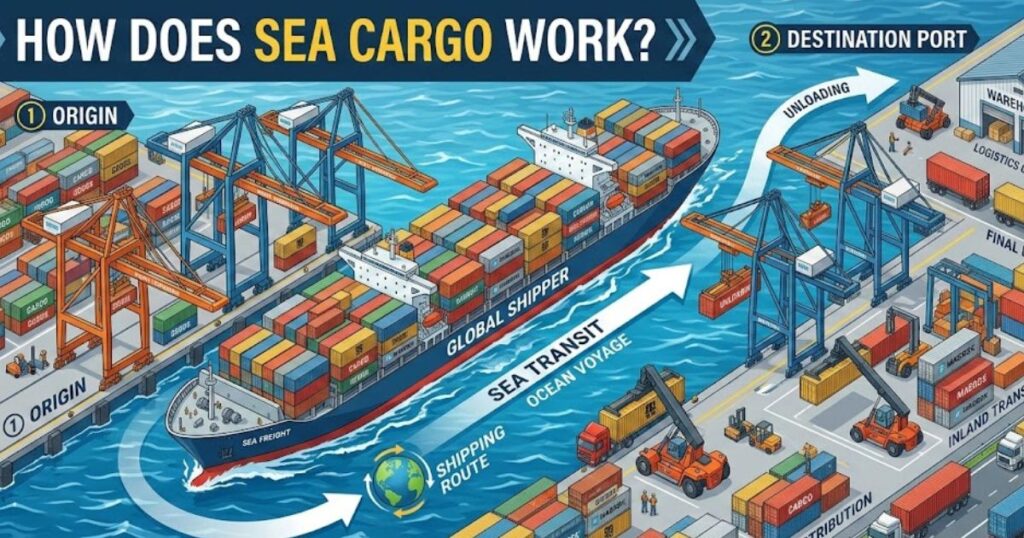
Ever wonder how your package gets from one side of the world to the other using a ship? It seems complicated, but it’s a bit like a relay race. Your package gets passed along a chain of experts who make sure it arrives safely. Let’s peek behind the curtain at the journey your items take.
Step-by-Step Process of Shipping via Sea Cargo
Sending your items via sea cargo to Pakistan follows a clear path. Here’s a simple breakdown of the journey:
- Booking: You start by contacting a company that offers ocean freight services. You’ll tell them what you’re sending, where it’s going, and they’ll handle the rest.
- Pickup & Packing: The company can pick up the items from your home. They pack everything securely into boxes or crates to prepare it for the long trip.
- To the Port: Your package is then taken to the nearest seaport and loaded into a large steel container, often with other people’s things, to make it an affordable sea cargo option.
- Ocean Journey: The container is loaded onto a massive ship, which sails across the ocean to Pakistan.
- Arrival & Unloading: Once it arrives, your package goes through customs. After it’s cleared, it’s unloaded and ready for the final step.
- Delivery: A truck picks up your package and delivers it right to the final address in Pakistan.
Key Players in the Sea Cargo Supply Chain
A whole team of people works together to make this journey happen. The main player you’ll work with is the freight forwarder. Think of them as your shipping travel agent. They organize the entire trip for your cargo, from your door to the destination. They work with shipping lines (the companies that own the ships), port workers, and local delivery drivers to ensure a smooth and seamless process. You just talk to the freight forwarder, and they coordinate with everyone else to get the job done.
Why Choose Sea Cargo for Shipping to Pakistan?
You have choices when shipping items, so why is sending your things by ship often the best one? While planes get things there fast, sea cargo has some amazing benefits that are hard to beat, especially when you’re sending goods to Pakistan. Let’s look at why so many people and businesses pick the ocean route.
Cost-Effectiveness
The biggest reason people choose ocean freight services is the price. It’s simply the most affordable sea cargo option available, especially for larger items. Think about it: a single ship can carry thousands of containers at once. By sharing that space, everyone saves money. So, if you’re shipping a car, moving your entire home, or sending a large order for your business, you’ll find that sea cargo keeps your budget happy.
Environmental Benefits
Did you know that shipping by sea is also kinder to our planet? Compared to airplanes, ships produce far fewer carbon emissions per ton of cargo they move. While the journey is longer, the overall environmental footprint is much smaller. By choosing sea cargo to Pakistan, you’re not just making a smart financial choice; you’re also making a greener one.
Suitability for Bulk and Oversized Goods
Have something really big or heavy to send? No problem! Sea cargo is perfect for items that are too bulky or heavy for air freight. Whether it’s industrial machinery, a vehicle, or a house full of furniture, ships are designed to handle it all. There are practically no size or weight limits, which gives you the freedom to ship almost anything you can think of. This makes it the only practical option for oversized goods.
Key Ports in Pakistan for Sea Cargo
When you send sea cargo to Pakistan, your shipment doesn’t just float onto a beach. It arrives at a massive, bustling port designed to handle thousands of containers. These ports are the gateways that connect Pakistan to the rest of the world. Let’s meet the three big players where your goods will likely arrive.
Karachi Port: The Hub of Trade
Imagine a super busy city that never sleeps, that’s Karachi Port! It is the oldest and largest port in the country, handling the majority of Pakistan’s trade. If you are using ocean freight services, chances are high that your container will land here. Located right in the heart of Karachi, this port is like the main front door for goods entering the country. It has deep water berths and huge cranes that work around the clock to unload everything from cars to clothes.
Port Qasim: A Growing Alternative
Just a little further down the coast is Port Qasim. Think of it as the newer, modern cousin to Karachi Port. It’s located about 50 kilometers away and handles a huge chunk of the country’s cargo. Because Karachi Port is so busy, Port Qasim is a fantastic alternative that helps speed things up. It’s especially great for heavy industrial goods and raw materials. By offering more space, it helps keep affordable sea cargo moving smoothly without getting stuck in traffic jams.
Gwadar Port: The Future of Trade in Pakistan
Gwadar Port is the new kid on the block, but it has big dreams! Located in the province of Balochistan, it is a deep-sea port that is quickly becoming a major trade center. While it’s still growing, experts call it a “game-changer” for future trade. It is designed to connect Pakistan with China and other neighbors more easily. As it develops, it will offer even more routes and options for reliable shipping.
Types of Sea Cargo Services
When you decide to use ocean freight services, you’ll find there isn’t just one way to ship your things. Think of it like ordering a pizza, you can get a whole pie just for yourself or share one with others. Sea cargo works similarly, offering different options to fit your needs and budget. Let’s explore the most common types.
Full Container Load (FCL)
If you have a lot of stuff to send, FCL is your best friend. It means you rent an entire container just for your goods. It doesn’t have to be completely full, but it’s all yours. This is a great choice if you’re moving your whole house or a business shipping a large order. Since the container is sealed at your end and only opened at the destination, it’s a very secure way to send sea cargo to Pakistan.
Less than Container Load (LCL)
What if you only have a few boxes to send? That’s where LCL comes in handy! With LCL, you share container space with other people. Your items are put together with others’ items to fill up a single container. This is the secret behind affordable sea cargo for smaller shipments. You only pay for the space you use, making it a perfect, cost-effective option for sending personal items, gifts, or small business inventory.
Breakbulk Cargo
Do you have something that’s too big, too heavy, or just too awkward to fit into a standard container? Don’t worry, there’s a solution for that, too. Breakbulk cargo is for oversized items like cars, boats, or large machinery. Instead of being packed in a container, these items are loaded directly onto the ship. It requires special handling but ensures that even the biggest and bulkiest goods can make the journey safely.
How to Choose the Right Sea Cargo Service Provider?
Picking the right company to handle your sea cargo to Pakistan is like choosing a team captain; you want someone you can trust to get the job done right. With so many options out there, it can be tricky to know who to pick. You need a partner who will treat your belongings with care and ensure they arrive safely. Let’s look at what makes for a great service provider.
Factors to Consider
Finding reliable shipping services doesn’t have to be a headache. Here are a few things to keep in mind to help you make a smart choice:
- Experience: Look for a company that has been in the business for a while. More experience often means they know how to handle any surprises that might pop up.
- Reviews: See what other customers are saying. Good reviews are a great sign that you’re dealing with a trustworthy company.
- Services Offered: Do they offer door-to-door cargo delivery? What about packing services? Choose a provider that offers everything you need to make the process easy.
- Price: Of course, you want affordable sea cargo. Get quotes from a few different companies to compare prices, but remember that the cheapest option isn’t always the best.
Questions to Ask Your Freight Forwarder
Before you commit, don’t be shy about asking questions! A good freight forwarder will be happy to answer them. Here are a few to get you started:
- Can you provide a full breakdown of all the costs?
- Do you offer insurance for my shipment?
- How will I be able to track my cargo’s journey?
- What happens if there’s a delay?
- Who handles the customs clearance in Pakistan?
Challenges in Sea Cargo Logistics in Pakistan
Sending packages across the ocean is mostly smooth sailing, but sometimes the waters can get a little choppy, metaphorically speaking! Even with reliable shipping services, moving sea cargo to Pakistan can face a few hurdles. It’s always smart to know what bumps might be in the road so you aren’t caught by surprise. Let’s look at the common challenges.
Customs Delays
Imagine waiting in a really long line at the grocery store when you just want to buy one apple. That’s sometimes what happens with customs. When your ocean freight services arrive at the port, officials need to check everything to make sure it’s safe and legal. Sometimes, paperwork gets mixed up, or there are just too many containers to check at once. This can cause your shipment to sit at the port a little longer than expected, delaying that happy delivery day.
Infrastructure Limitations
Ports are like giant parking lots for ships and trucks. In Pakistan, these “parking lots” and the roads leading out of them can get super crowded. Sometimes there aren’t enough cranes to unload ships quickly, or the roads are jammed with traffic. These infrastructure limits mean that even if your ship arrives on time, getting your sea cargo to Pakistan onto a truck and out to your doorstep might take a bit of extra patience.
Political and Economic Factors
Just like how the weather can change your plans for a picnic, changes in the country can change shipping plans. Sometimes, new rules about money or trade are made, or there might be protests that block roads. These political and economic factors can slow things down or change the cost of shipping unexpectedly. It’s why picking an experienced team is so important; they know how to navigate these tricky situations for you.
Innovations in Sea Cargo
Remember when waiting for a package felt like staring into a black hole? You had no idea where it was! Well, the world of ocean freight services is getting a major upgrade. New inventions are making shipping smarter, faster, and cleaner. Let’s peek into the future of how things move across the ocean.
Digital Tracking and Automation
Gone are the days of guessing games. Thanks to digital tracking, you can now follow your shipment’s journey almost like watching a pizza delivery driver on a map. When you send sea cargo to Pakistan, smart sensors on containers can tell you exactly where your stuff is in real-time. Automation is also stepping in with robots at ports are helping load and unload ships faster than ever. This means fewer mistakes and quicker deliveries for you.
Eco-Friendly Shipping Solutions
Ships are big, and they use a lot of fuel. But good news! The industry is working hard to go green. Engineers are designing new ships that use cleaner energy, like wind or special eco-friendly fuels, to cut down on pollution. By choosing these modern options, you’re not just getting reliable shipping services; you’re helping protect our oceans and the air we breathe. It’s a win for you and a high-five for the planet.
The Role of Technology in Improving Efficiency
Computers are the new captains! Advanced software helps companies plan the perfect route for every ship, avoiding bad weather and traffic jams at sea. This technology makes sure that every inch of space on a ship is used wisely, which helps keep costs down. It’s all about working smarter, not harder, to make sure your package arrives safe, sound, and right on time.
Tips for First-Time Sea Cargo Users
Sending your first shipment across the ocean can feel a bit like your first day at a new school, exciting but a little nerve-wracking! If you’re new to ocean freight services, don’t worry. With a little preparation, you can ship like a pro. Here are some golden nuggets of advice to help you get your sea cargo to Pakistan without a hitch.
Common Mistakes to Avoid
We all make mistakes, but when it comes to shipping, some errors can cost you time and money. Here are a few traps to watch out for:
- Last-Minute Booking: Ships fill up fast! Don’t wait until the day before you need to ship. Booking early ensures you get a spot and often a better price.
- Bad Packing: The ocean can be bumpy. Using old, weak boxes is a recipe for disaster. If your boxes crush easily, your items inside might break.
- Wrong Paperwork: This is the most common headache. Double-check every form. A single typo in an address or a missing document can leave your package stuck at the port for weeks.
How to Prepare Your Shipment for Sea Cargo
Ready to pack? Let’s make sure your goods are safe and sound for their long journey.
- Use Strong Boxes: Always use new, sturdy cardboard boxes. If you are shipping heavy items, double-wall boxes are your best friend.
- Wrap It Up: Bubble wrap is essential for anything fragile. Don’t be shy with it! Make sure items can’t wiggle around inside the box.
- Label Clearly: Write the destination address clearly on at least two sides of every box. It also helps to put a copy of the address inside the box, just in case the outside label gets damaged.
- Pick the Right Partner: Choosing reliable shipping services is half the battle won. A good company will guide you through the packing rules so you don’t have to guess.
The Future of Sea Cargo in Pakistan
What does tomorrow look like for shipping? It’s not just about bigger boats; it’s about smarter, faster, and greener ways to move things around the world. The future of sea cargo to Pakistan is bright, with exciting changes on the horizon that will make sending your packages easier than ever. Let’s peek into the crystal ball and see what’s coming next for ocean freight services.
Emerging Trade Routes
Think of trade routes like highways on the ocean. Just like new roads are built to help traffic flow better, new shipping paths are being created to connect Pakistan with more countries. The development of Gwadar Port is opening up direct lines to China and Central Asia. This means your goods won’t have to take the long way around anymore. These new shortcuts will make reliable shipping services faster and often cheaper, connecting you to more corners of the globe.
Technological Advancements
We are entering the age of digital shipping! Soon, paperwork might disappear entirely, replaced by secure digital systems that can’t be lost or damaged. Imagine smart containers that can “talk” to the port, letting workers know exactly what’s inside before they even arrive. This technology will speed up customs checks and reduce mistakes, ensuring your package spends less time sitting at the dock and more time moving toward its destination.
Sustainability Goals
Protecting our planet is a big part of the future plan. Shipping companies are working hard to reduce pollution. We will see more ships running on cleaner fuels, like natural gas or even electricity, instead of heavy oil. Ports in Pakistan are also aiming to become “green ports,” using solar power and wasting less energy. By choosing these modern services, you’ll be part of a global effort to keep our oceans blue and healthy.
Conclusion
Sea cargo remains one of the most important shipping methods in global trade. It allows businesses to transport large volumes of goods at an affordable cost. Although delivery times are longer than air freight, the reliability and capacity make it a preferred choice for international logistics. With proper planning and shipping partners, sea cargo can greatly improve supply chain efficiency. For companies involved in global commerce, it continues to be a dependable and practical transportation solution
FAQs
What is sea cargo and how does it work?
Sea cargo is the transportation of goods through ships across oceans and seas. It is widely used for international trade because it can carry large quantities of products at a lower cost. Goods are usually packed in containers and loaded onto cargo ships, then transported between ports worldwide. This method is ideal for bulk shipments and heavy items.
How long does sea cargo shipping usually take?
Sea cargo shipping time depends on the distance between ports and the shipping route. On average, international sea cargo deliveries can take anywhere from 15 to 45 days. Factors like customs clearance, weather conditions, and port handling can also affect the overall delivery time. Despite the longer transit time, it remains a cost-effective solution.
What types of goods are commonly transported through sea cargo?
Sea cargo is suitable for transporting a wide range of goods including raw materials, machinery, electronics, vehicles, and consumer products. It is especially useful for businesses shipping large volumes or heavy items that are expensive to send by air. Containers also help keep goods secure and protected during long journeys.