
Importing from China to Pakistan is a profitable way to start or grow a business, thanks to China’s low-cost manufacturing and wide product range. The process involves selecting the right product, finding reliable suppliers, negotiating prices, and arranging shipping through sea or air freight. You also need to handle customs clearance, duties, and documentation in Pakistan. With the right strategy and trusted partners, importing can be simple, cost-effective, and highly rewarding for beginners and experienced traders alike.
Setting Up Your Import Business in Pakistan
Before we start shopping, we need to put on our business hats. Setting up your journey to import from China to Pakistan means creating a real, official company. It is like getting a VIP pass to a special club.
Here are the 3 easy steps to get your VIP pass:
- Register Your Name: If you are building a big company with partners, you will talk to the SECP. If it is just you, you will register with the FBR as a solo owner.
- Get Your Special Numbers: You need a National Tax Number (NTN) and a Sales Tax Registration. Think of these as your business ID cards. They show the government you are a real, responsible player.
- Open a Bank Account & Join the Chamber: You will need a special bank account just for your business money. Then, join your local Chamber of Commerce. It is a group of friendly business owners in your city who help each other out!
How to Find and Vet Reliable Chinese Suppliers?
Now for the fun part: shopping! But when you import from China to Pakistan, you need a trusted friend on the other side. You cannot just buy from anyone. You need to find a seller who makes great things and keeps their promises.
- Online Marketplaces: Websites like Alibaba or Global Sources are like giant digital shopping malls. You can search for anything you want.
- Ask for Samples: Always ask the seller to send you one single item first. You want to touch it, feel it, and make sure it is high quality before you buy 100 of them.
- Check Their Badges: Look for sellers who have gold stars, verified badges, or lots of happy reviews. If a seller has been making toys or clothes for 10 years and everyone loves them, they are a safe bet!
Financial Operations: Paying Your Suppliers Securely
Sending money across the world can feel a little nervous. You want to make sure your money is safe and the seller gets it right.
The State Bank of Pakistan has rules for sending money out of the country. They want to keep everything safe and fair. The best way to pay your new Chinese supplier is through your bank. You can use something called a “Letter of Credit.” This is basically a promise note from your bank to their bank. It says, “We will give you the money only when you prove you sent the boxes.” It keeps everyone honest and happy!
Watch out for hidden bank fees when changing your money into their money. Always ask your bank what the total cost will be so there are no unhappy surprises.
Choosing the Right Shipping Method
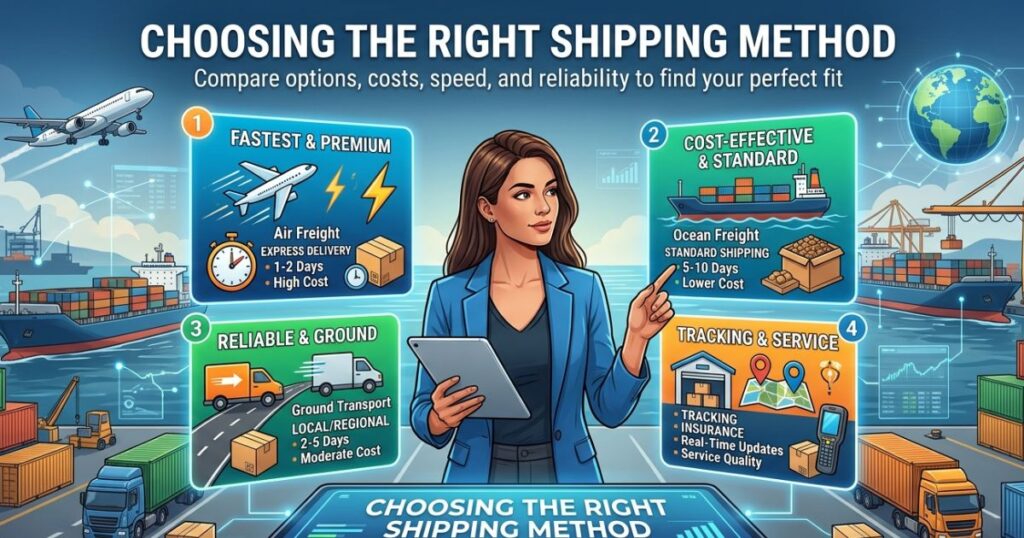
Okay, your items are boxed up and ready to go! How do they get here? You have two main choices when looking at shipping from China to Pakistan.
- Air Freight (Flying): This is super fast! Your boxes go on an airplane. It is the best choice if you are selling small, expensive things like phones, or if you are in a big hurry. But, it costs more money.
- Sea Freight (Sailing): This is when your boxes go on a giant ship across the ocean. It takes longer (sometimes a few weeks), but it is the cheapest shipping from China to Pakistan.
When you ship by sea, you might hear about FCL and LCL. Do not let those letters confuse you!
- FCL: This means you rent the whole giant metal shipping box (container) just for your stuff.
- LCL: This means you only have a few boxes, so you share the giant metal container with other people.
If you want the easiest path, look for DDP shipping and door to door delivery. This means the seller handles all the driving, sailing, and delivering right to your front door!
Customs, Duties, and the FBR Framework
When your boxes arrive at the border, the government wants to check what is inside and ask for a small fee. This is called customs clearance in Pakistan.
Calculating taxes when you import from China to Pakistan is easy if you know the steps. Every single item in the world has a special number called an HS code or PCT code. A cotton shirt has one number, and a plastic toy has a different number.
Once you know your item’s special number, you can use the FBR import tax calculator online. Just type in the number and the price of your goods. The calculator does the math and tells you exactly what your import duties and taxes will be. It is like magic!
Navigating WeBOC: Do You Really Need a Customs Agent?
What in the world is WeBOC? It sounds like a funny robot name, but it is actually the online computer system the government uses to track all boxes entering the country.
To clear your boxes through customs, you have to use WeBOC. Can you do it by yourself? Yes, you can register for your own WeBOC account. But, the computer system has a lot of buttons and rules.
If you are just starting, hiring a friendly customs clearing agent is a brilliant idea. They know exactly which buttons to press and what papers to show (like your packing list and certificate of origin). They do the hard work so you can relax and focus on selling your goods.
Navigating Product Regulations and Compliance
Before you buy anything, you must make sure it is allowed inside the country. The government has lists called Appendices that tell you the rules.
- The No-Go List: Some things are strictly banned. You cannot bring them in at all.
- The “Ask Permission” List: Some things need a special permission slip before you can bring them in.
- The Used Goods List: Be very careful buying used or second-hand items, as many of them are not allowed.
Also, if you are bringing in food, candy, or makeup, you absolutely need Halal certification. This proves that the items follow the rules of our culture and religion.
Top Trending Products to Import
You might be wondering, “What should I buy?” Finding the right products is like picking the ripest apples on a tree. You want things that people are eager to buy right now.
Right now, wholesale imports like smart home gadgets, solar panels, and fitness gear are super popular. People love cool phone accessories, wireless headphones, and comfortable activewear. Look for items that are lightweight, easy to ship, and make people smile.
Conclusion
Importing from China to Pakistan can be a highly profitable business opportunity if done correctly. By choosing the right products, working with reliable suppliers, and understanding shipping and customs procedures, you can minimize risks and maximize profits. Whether you are a beginner or an experienced trader, proper planning, cost calculation, and compliance with import regulations are key to long-term success. With consistency and smart decision-making, importing can become a sustainable and scalable business.
FAQs
What documents are required to import from China to Pakistan?
To import goods into Pakistan, you typically need an NTN (National Tax Number), Sales Tax Registration, Importer Registration with Pakistan Customs (WeBOC), commercial invoice, packing list, bill of lading or airway bill, and sometimes a certificate of origin. These documents ensure smooth customs clearance and legal compliance.
How long does shipping from China to Pakistan take?
Shipping time depends on the method you choose. Sea freight usually takes around 20–40 days, depending on the port and route, while air freight is much faster, typically 3–7 days. However, customs clearance and local delivery may add a few extra days to the total time.
Is importing from China to Pakistan profitable?
Yes, importing from China can be very profitable due to lower product costs and high demand in the Pakistani market. Profit depends on choosing the right niche, managing shipping costs, and setting competitive prices. Proper market research and supplier verification play a crucial role in success.